
Best Paint Protection for Your Car: Which Option Is Right?


Choosing the right paint protection can help preserve your vehicle’s factory finish, reduce long-term wear, and support resale value. This guide compares wax, sealants, ceramic coatings, and paint protection film so you can decide which option best suits your vehicle.
Keeping your paint in good condition is about more than appearance. Good protection helps preserve resale value, reduce wear over time, and keep the vehicle looking well maintained.
This becomes even more important if you want to avoid repainting later. As explained in our article on whether repainting your car can reduce its value, many buyers place a premium on original paint. Proper protection helps reduce future paint issues that can make a vehicle look older and less cared for.
The right product creates a barrier between the paint and everyday threats such as sun, bird droppings, road grime, tree sap, and general exposure. That barrier helps protect the factory finish and gives car owners a practical way to protect your car without unnecessary repainting later.
If you are comparing the best paint protection options for your vehicle, it helps to understand what each product actually does, how long it lasts, and what kind of protection it can realistically provide.
Why Paint Protection Matters
Your paint faces constant exposure to UV, heat, moisture, dirt and grime, and surface friction. Over time, these conditions can dull the finish, weaken the clear coat, and increase the risk of staining, oxidation, and early wear.
Regular washing removes surface build-up, but it does not create long term protection on its own. To protect your paint properly, you need a sacrificial layer over the painted surface. That extra layer absorbs wear before the factory finish does.
Good car paint protection can help:
- reduce UV damage and fading
- make the vehicle easier to clean
- limit staining from bird droppings and sap
- improve water beading
- support a glossy finish
- protect resale value over time
- For a full breakdown of how repair choices affect what your car is worth, read our guide on how PDR protects your vehicle's resale value.
If your goal is effective vehicle paint protection, the best result usually comes from matching the product to the way you use and store the car.
Car Wax vs Sealant: A Practical Starting Point

For many owners, the first comparison is car wax vs sealant. Both can improve appearance and add a protective layer, but they differ in durability and upkeep.
Carnauba Wax
Carnauba wax gives the paint a warm, rich shine. It can also soften the look of minor scratches, which is why many enthusiasts still use it.
The downside is durability. Perth heat can shorten the life of natural wax, especially on a daily-driven vehicle parked outside. Most owners need to reapply it every six to eight weeks.
Wax may suit drivers who enjoy regular upkeep and want a traditional finish, but it does require ongoing maintenance.
Synthetic Sealants
A paint sealant usually lasts longer than wax and offers stronger UV protection for car paint. Synthetic formulas bond more tightly to the surface and create a sharper, more reflective finish.
Many car owners choose sealant because it is more practical for regular use. It lasts longer, helps protect your vehicle from road film and weather, and usually makes the paint easier to clean.

A quality sealant can offer:
- better durability than wax
- stronger resistance to UV and weather
- less frequent reapplication
- a cleaner, more glass-like finish
For most daily-driven cars, sealant is the more practical choice when comparing wax and synthetic options.
Ceramic Coatings: Stronger, Longer-Lasting Protection
Ceramic coating has become one of the most popular forms of paint protection for your vehicle because it offers longer-lasting defence than wax or sealant.
When applied correctly, ceramic coating offers a durable outer layer that helps resist water, dirt, road film, and chemical staining. It also improves hydrophobic properties, meaning water beads and runs off more easily. That helps keep the surface cleaner between washes.
A ceramic coating can help:
- improve water behaviour
- reduce UV damage
- resist staining from bird droppings and sap
- make the car easier to clean
- support long term protection
Ceramic products also add peace of mind for owners who want lower-maintenance protection. That said, ceramic coating does not stop rock chips or dents. It protects the finish, but it does not provide impact protection.
This matters when comparing ceramic coating vs paint protection film. One protects against chemical wear and weathering. The other protects against physical impact.
Paint Protection Film: Best for Physical Damage
If stone chips and road debris are your main concern, paint protection film is the strongest option.
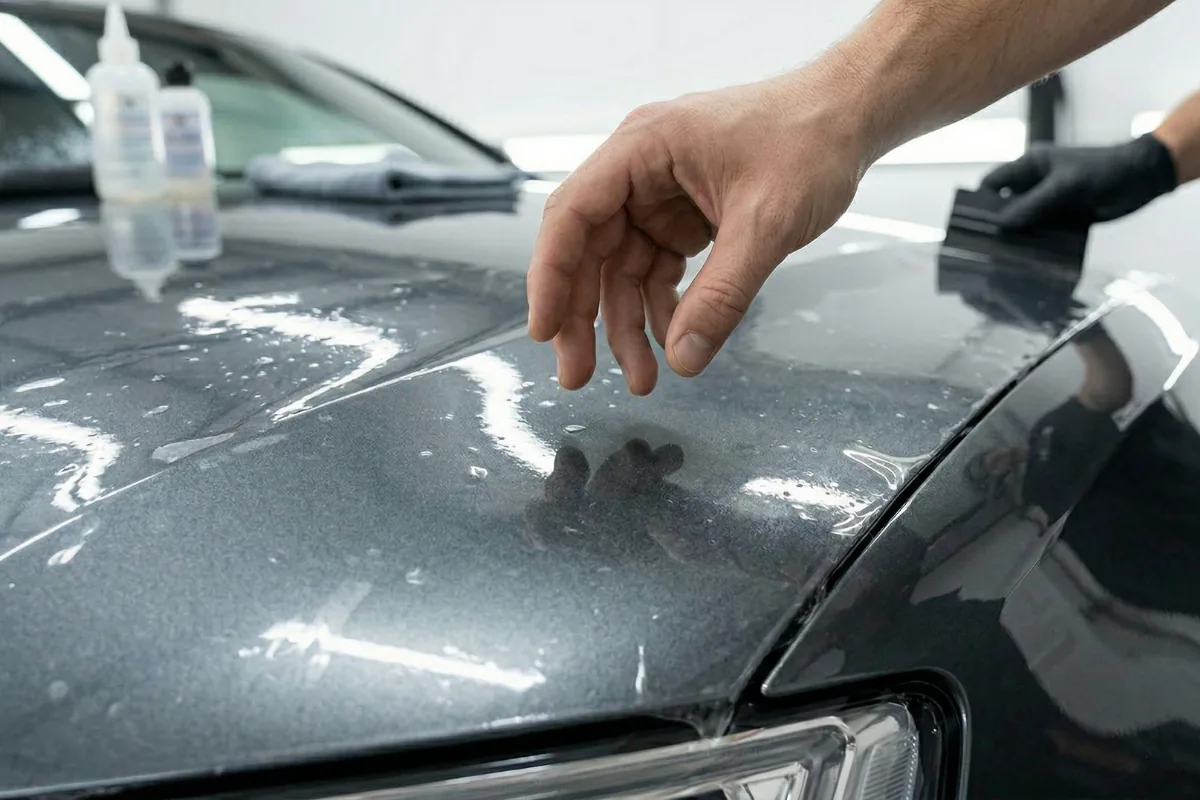
Paint protection film, or PPF, is a clear urethane layer applied over the paint. The film absorbs impact from gravel, debris, and light contact in high-risk areas such as:
- front bumpers
- bonnets
- mirrors
- guards
- lower doors
- side skirts
Modern PPF also has self-healing properties. Light marks and minor scratches can soften and fade when heat warms the surface, helping the finish stay clearer over time.
Because of its thickness and durability, PPF is the best choice when physical protection matters most. It costs more than wax, sealant, or ceramic coating, so many owners focus on the front of the vehicle or other exposed panels rather than covering the entire car.
When weighing up ceramic coating vs paint protection film, think about the type of driving you do. Highway driving usually benefits more from film, while city driving often benefits more from coatings and sealants.
Which Option Is Best?
The best paint protection for your car depends on how you drive, where the vehicle is parked, and how long you intend to keep it.
Wax may suit you if:
- you want a lower-cost starting point
- you enjoy maintaining the car yourself
- the vehicle is garaged and lightly used
Sealant may suit you if:
- you want stronger durability than wax
- you use the vehicle regularly
- you want a simple product with better staying power
Ceramic coating may suit you if:
- you want lower-maintenance protection
- your vehicle spends time outdoors
- you want stronger chemical and UV resistance
Paint protection film may suit you if:
- you drive on highways often
- you want protection from stone chips
- you want to protect high-impact areas on a newer vehicle
For Australian conditions, especially strong sun exposure, many owners looking for the best car paint protection Australia options choose either ceramic coating, PPF, or a combination of both.
Paint Protection Does Not Replace the Right Repair Method
Protection products help maintain paint condition, but they cannot restore factory originality after poor repair work.
If a technician sands, fills, and repaints a dent that could have been repaired with paintless dent repair, the original finish is lost for good. In most cases, professional PDR costs less than a traditional panel repair — and preserves far more. That is why proper assessment matters before any cosmetic repair starts.
For the right type of damage, paintless dent repair preserves the original paint and supports both appearance and resale value. If you are planning to protect your vehicle after a dent repair, it makes sense to preserve factory paint first wherever possible.
Surface Preparation Still Matters
Even the best product performs poorly on a badly prepared surface. Dirt, staining, and swirl marks left on the paint before application will affect the final result.
Before applying any protection, the vehicle should be:
- washed thoroughly
- clay barred or cleaned properly
- dried fully
- corrected if required
Good preparation gives the product the best chance to bond well and last longer.
Protect Your Vehicle for the Long Term
The best product depends on your priorities. Some owners want an affordable layer that helps with regular washing and everyday wear. Others want stronger defence against UV, weather, and road debris.
Either way, early protection is easier and cheaper than trying to correct neglected paint later.
If your car already has dents, creases, or hail marks, have that assessed before investing in surface protection.
Got dents before you protect the paint? Get those sorted first — PDR preserves the factory finish that protection products are designed to maintain.
Recent PDR Articles
Read our most recent PDR articles on maintaining your vehicle's appearance.
Serving All Areas of Perth
Our 100% mobile service ensures you receive top-notch dent removal wherever you are in Perth. Enjoy the convenience of professional care without the hassle of visiting a workshop.
